November 5, 2009
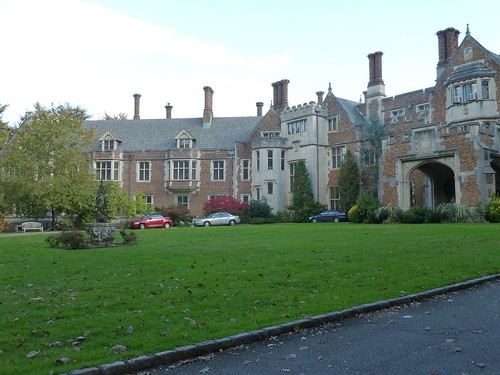
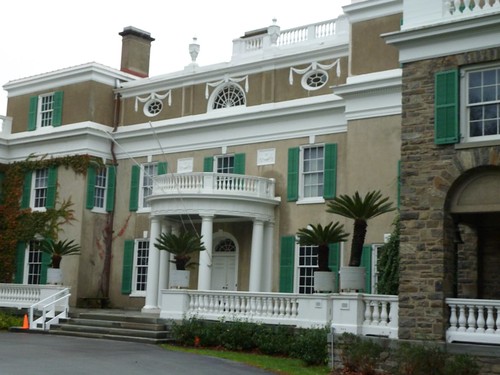
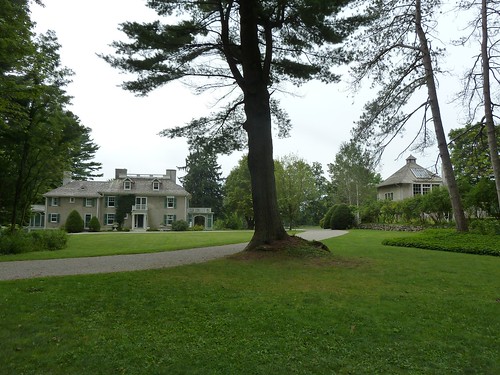
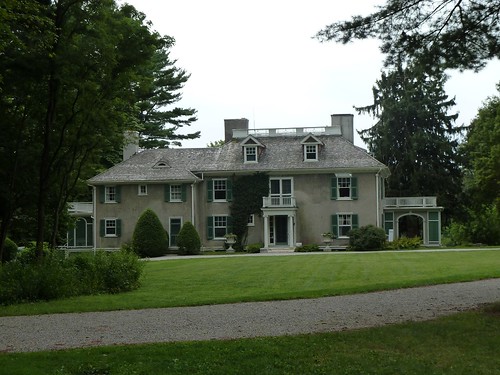
This beautiful house was designed in the Neo Federal style by the architects Carrere and Hastings in 1916 for Alfred I . du Pont. At that time it was known as “White Eagle.” In 1923 the Frederick Guest family bought it and called it “Templeton.” It now serves as the De Seversky Conference Center for the New York Institute of Technology.

East Facade Templeton
The east facade is the view of the house you see from the approaching driveway. Here is what the front or south facade looks like.

South Facade with Main Entrance

North Facade
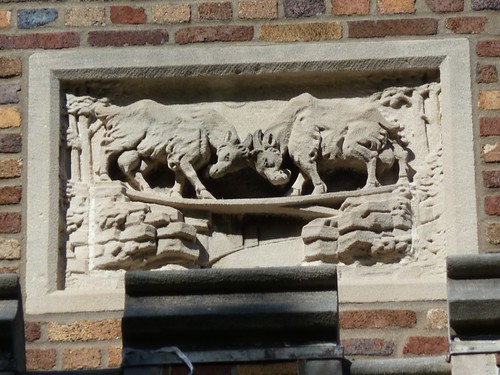
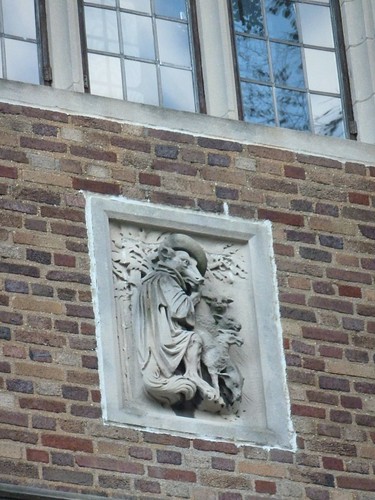
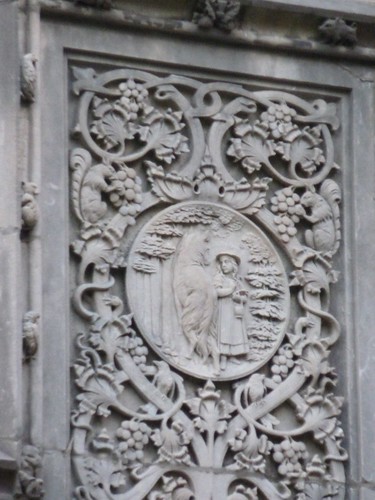
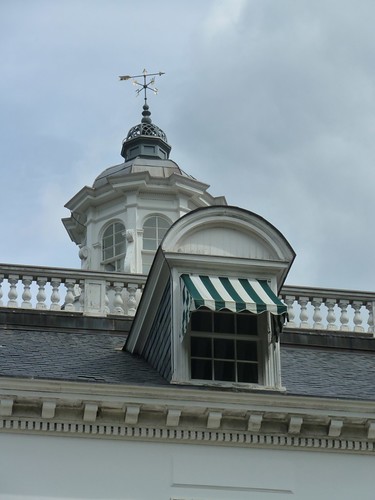
This building has extraordinary architectural details on it. Here are a few of my favorites:

Detail North Facade
I wonder if these niches ever housed sculptures?

Arches over Windows

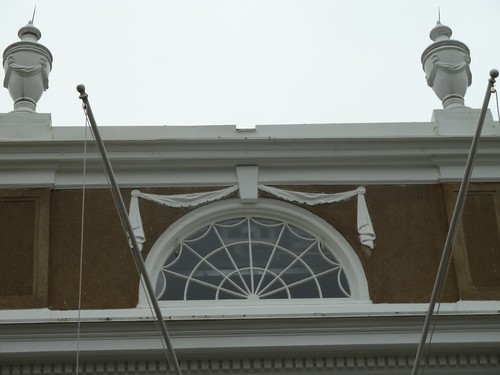
Detail near roof
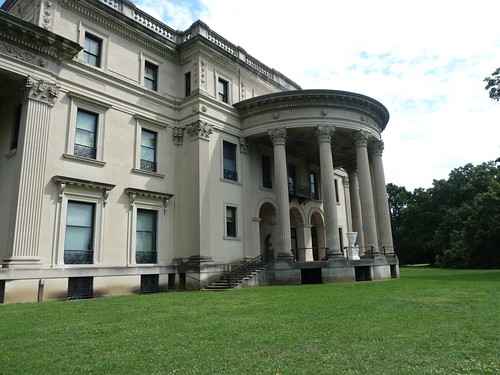
Of course my favorite details are on the east facade:

Detail East Facade

East Facade Colonnade
The colonnade is wonderful!
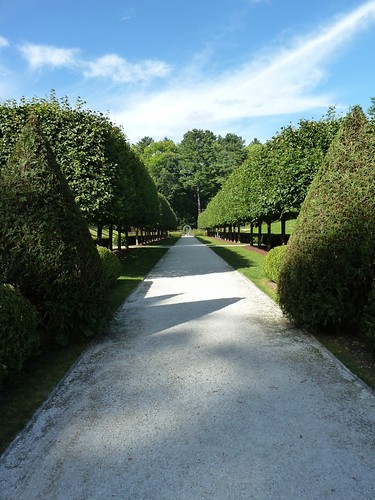
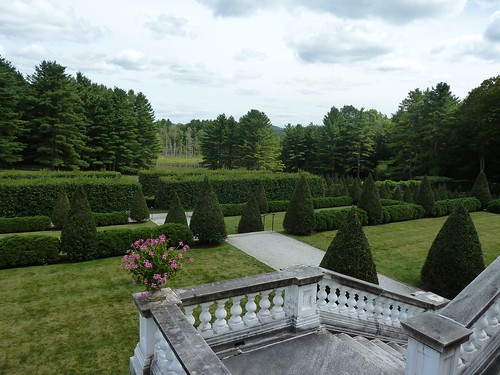
The landscape plan and the architecture of this house blend together perfectly. I love the Linden Tree allees on the south side of the house.

Linden Tree Allee
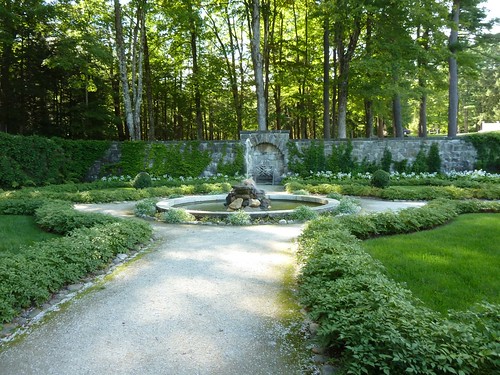
Here is one of my favorite photos:

Garden Wall Detail
Here is another:

Garden Fountain
For more photos of Templeton, including some interior shots, please visit my Flickr site.
Last year I visited and blogged about another one of Alfred I. du Pont’s Residences.
October 20, 2009
Oheka Castle is the second largest private residence built in America. It was designed by the architects Delano & Aldrich between 1914 -1919 for finacier Otto H. Kahn. The castle is currently a hotel and catering venue. I believe I got “Castle Fever” while I was there – I was enthralled by the architecture and the landscape. I took many photos of the Castle and its interior spaces. Here is a sample:
Oheka Side view

National Register Plaque

Courtyard view

Terrace Room View

Loggia
Because I took so many photos, I recommend viewing them on my Flickr site.
October 20, 2009
Fairleigh was designed by the architects Trowbridge and Livingston in 1914 for the George S. Brewster family. It now serves as The Hoffman Center, a private nature preserve and wildlife sanctuary that is occasionally open to the public.

Front of Fairleigh
I was visiting Fairleigh for a lecture about horse and automobile racing on Long Island. The cars in front of the mansion were on exhibit.

Rear Facade of Fairleigh
It was raining the day of my visit, so I did not get many exterior photos. This one shows the rear facade of Fairleigh.

Rear Terrace
The terrace, looking towards the terrace room, which was recently added to the estate.

Reflecting Pond
The reflecting pond was visible from the rear terrace.

Main Entrance Chandelier
I just loved this chandelier, it is spectacular!

Inside the Terrace Room
The interior of the terrace room.

Interior of the West Loggia
The West Loggia is being restored.

Exterior of West Loggia
For more photos of Fairleigh visit my Flickr site.
October 20, 2009
This Italina Renaissance style home was designed by the architects Hunt & Hunt in 1912 for banking and railroad tycoon Henry Sanderson. The home is in private hands and is currently for sale. It is hosting a Designer’s Showcase from October 3rd to November 15th 2009.

Front Entrance La Selva

Side View
I visited La Selva on a beautiful day, seemingly rare to come by this year. This view shows the garden patio with the loggia to the magnificent living room visible with the master suite balcony above.

Garden from Balcony
This is the view of the garden from the master suite balcony with the wonderful garden folly visible in the back.

Garden Folly close up
I love the way these statues relate to one another. They serve as an entrance to the wonderful, Olmstead designed grounds.

Garden from Balcony 2
Here is a view of the formal garden, adjacent to the garden and patio pictured above.

Inside the Formal Garden
The seating area was very inviting.

Back View of La Selva from formal garden
As you walk along the rear of the building, you come across a second loggia, which was wonderfully decorated.

Loggia 2
Beyond the loggia is another, large terrace overlooking the property.

Terrace and Building

Lawn from Terrace

Coach House
The coach house had boutiques and lunch inside of it. Opposite the coach house was a garden gate that I found to be intriguing.

Fruit Tree Garden Gate
It led to a walled garden that contained fruit trees.

Looking into the Gate
Please visit my Flickr site for more photos from La Selva.
September 8, 2009
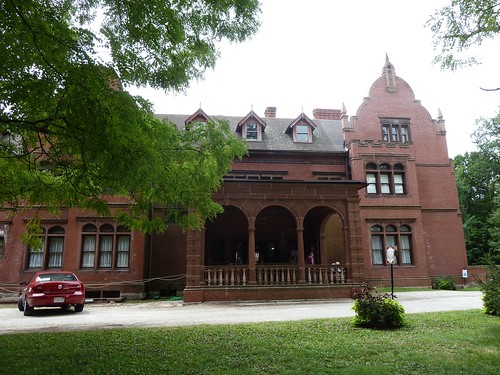
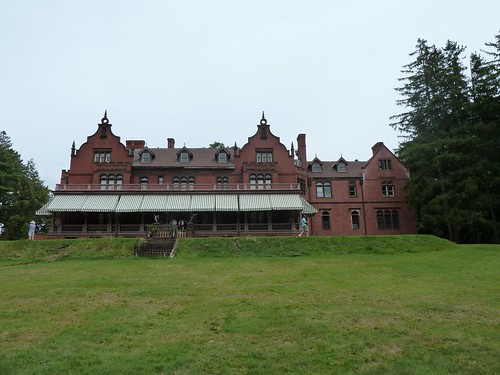
Elm Park was one of the first Victorian great houses to be built. It was designed by architect Detlef Lienau for LeGrand Lockwood in 1868. In 1876, Charles D. Mathews bought the mansion and his family lived there until 1938 without making many changes to the beautiful interior spaces. Then the house came under the ownership of the City of Norwalk, and has withstood several attempts to tear it down. Today, it is known as the Lockwood-Mathews Mansion Museum, a National Historic Landmark, and it is receiving loving care.

Elm Park
The mansion may look familiar to you. It has been used in several movies such as The Stepford Wives and Dark Shadows.

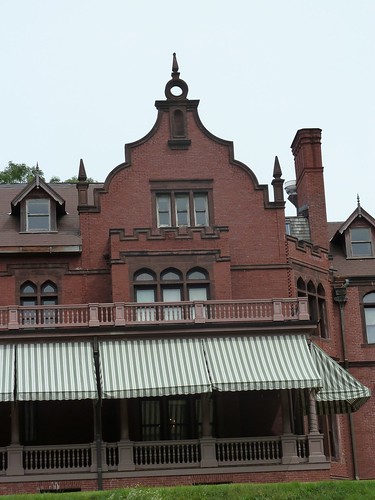
Roof Line Detail

Another View of the Mansion

View 3 of Mansion

Front Entrance Elm Park

Weather Vane

Gate House - Elm Park

Coach House - Elm Park

Interior - Green House - Elm Park

Rotunda Sky Light
For more photos you can visit my Flickr site.
September 8, 2009
Timber Point was built as a working farm for William L. Breeze in 1882. The architect of the original building is not known at this time, but it was Queen Anne in Style. In 1905, Timber Point was sold to Julian T. Davies. Mr Davies hired the architects Hart and Shape to alter the house and create the Colonial Revival Style structure we see today. Today, it is part of Suffolk County Parks and it’s grounds are used as a golf course.

Timber Point

Interior - Great Hall

Beech Tree at Entrance to Timber Point
Please visit my other Website for more information and photos of
Timber Point on the South Shore History Site. You can also visit my Flickr site.
September 3, 2009
Indian Neck Hall was built for “Commodore” Frederick Gilbert Bourne. Commodore Bourne hired architect Ernest Flagg to create this country estate and the Olmstead Brothers to design the landscape of more than 1000 acres. Built between 1897–1900 and then again between 1907–1908, the Federal Revival style mansion had 110 rooms when it was completed. In the past, it was also known as the La Salle Military Academy, today it is the Oakdale Campus of Saint John’s University.

Indian Neck Hall

Looking Towards the Tower

Detail View - Front Gates
Please visit my other Website for more information and photos of
Indian Neck Hall on the South Shore History Site. You can also visit my Flickr site.
September 3, 2009
Meadow Edge is the former Anson Hard Estate. It was built in 1905 by the architect Issac H. Green. It is Colonial Revival in style.

Meadow Edge Estate
Today, the estate is home to the West Sayville Country Club at Charles R. Dominy County Park, as well as the Long Island Maritime Museum, and the Greenhouse Recreation Opportunities Workshop (G.R.O.W.) Sponsored by DDI, The Developmental Disabilities Institute.

Carriage House

Main Gate House

Side Gate House

Greenhouses at Meadow Edge
Please visit my other Website for more information and photos of
Meadow Edge on the South Shore History Site. You can also visit my Flickr site.
July 17, 2009

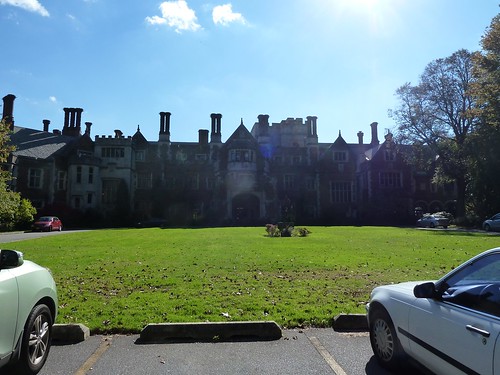
Coindre Hall
Coindre Hall is a Medieval French Chateau style mansion that was built between 1906-1911 for George McKesson Brown. Mr. Brown lost his fortune and this mansion in the stock market crash of 1929. Subsequently, it became a school run by the Brothers of the Sacred Heart (1939-1971) and was briefly known as the Eagle Hill School in the 1970’s. It is listed on the National Register of Historic Places and is a Suffolk County Park.

Detail - Front Roof line

Detail - Front Tower

Looking up one of the Front Towers

Porte Cochere

Back Lawn - Looking towards Huntington Harbor

Back View - Coindre Hall

Detail - Rear View Roof Line

Copper Beech Tree
For more photos, you can visit my Flickr site.